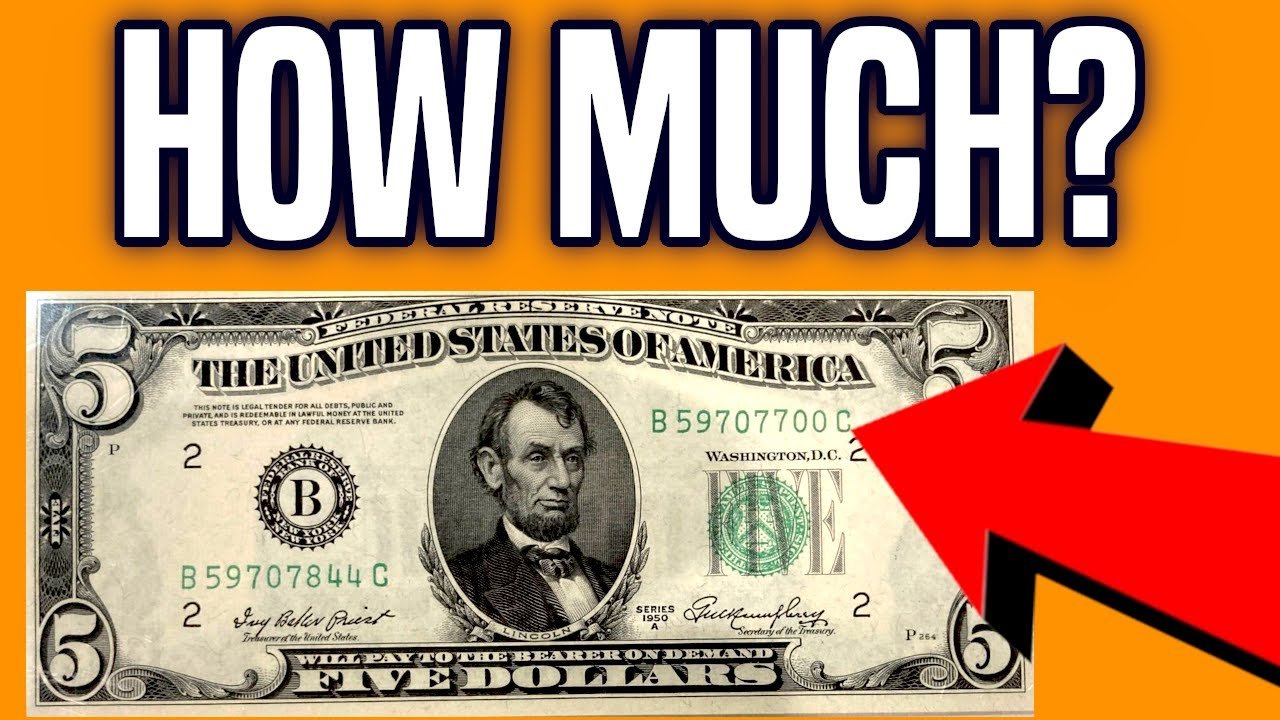
A catchy headline can make for a great story, but it’s important to be accurate here: a 1995 $5 bill with an upside-down Treasury seal is not a widely recognized or documented major U.S. currency error. Many viral articles exaggerate or invent the rarity and value of such notes.
If you’re publishing this on a website, it’s better to present it as a guide to checking for possible printing errors rather than implying that this specific error is a known valuable variety.
Check the Money in Your Pocket: How to Identify a 1995 $5 Bill With an Upside-Down Seal
Most of us never think twice about the cash in our wallets. A five-dollar bill is something we use for a quick coffee, a snack, or small everyday purchases. But every once in a while, an ordinary-looking banknote catches the attention of collectors because of a rare printing mistake. That’s why stories about unusual currency errors continue to fascinate people.
One topic that has recently gained attention online is the 1995 $5 bill with an upside-down seal. While claims about its value often circulate on social media, it’s important to understand what a genuine printing error looks like and how to determine whether your bill is truly unusual.
Why Currency Printing Errors Happen
The U.S. Bureau of Engraving and Printing (BEP) uses highly advanced equipment and strict quality-control procedures to produce millions of banknotes every year. Despite these safeguards, a small number of notes with printing mistakes occasionally make it into circulation.
These mistakes, known as error notes, are prized by collectors because they are uncommon. Examples include misaligned prints, missing seals, ink smears, offset printing, and mismatched serial numbers. Genuine errors are much rarer than bills that simply appear odd because of wear or damage after leaving the printing press.
What Is an Upside-Down Seal?
An upside-down seal refers to a situation where one of the official seals printed on the front of the note appears rotated relative to the rest of the design.
On a standard 1995 $5 bill, you’ll normally find:
- Abraham Lincoln’s portrait on the front.
- A green Treasury seal.
- Federal Reserve identification markings.
- Two matching serial numbers.
If the seal were truly printed upside down during production, it would represent an unusual manufacturing error. However, experts note that such errors are extremely uncommon, and many online images claiming to show them are altered, misunderstood, or unverified.
How to Examine Your 1995 $5 Bill
If you happen to own a Series 1995 $5 bill, inspect it carefully under good lighting.
Check the following:
- Confirm that the note says Series 1995.
- Compare the Treasury seal with images of genuine notes.
- Make sure both serial numbers match.
- Look for other unusual printing characteristics, such as missing ink or significant misalignment.
- Avoid confusing folds, stains, or damage with printing errors.
Sometimes a bill may look unusual simply because it has been heavily circulated.
Does an Error Bill Have Collector Value?
Possibly—but only if the error is genuine.
Collectors typically consider several factors before assigning value:
- Authenticity of the printing error
- Rarity of the mistake
- Overall condition of the note
- Demand among collectors
- Professional grading or authentication
A dramatic, authenticated printing error may be worth more than face value, while a common circulated bill with no verified error is generally worth only $5.
Be Careful with Viral Claims
Social media and online videos often feature headlines claiming that a particular bill is worth thousands or even millions of dollars. These stories attract attention, but they don’t always reflect the real collector market.
Before assuming your note is valuable, verify the information through reputable currency experts or trusted numismatic organizations. Genuine rarity is determined by authentication and collector demand—not by viral posts.
How to Protect a Potential Error Note
If you believe your bill may have a legitimate printing error:
- Handle it carefully by the edges.
- Place it in a protective currency sleeve.
- Avoid folding, cleaning, or writing on it.
- Keep it away from moisture and direct sunlight.
- Consider having it evaluated by a professional paper-money grading service.
Proper storage helps preserve the note’s condition, which plays a major role in determining its value.
Should You Sell It?
If a qualified expert confirms that your note contains a genuine printing error, you may consider selling it through a reputable currency dealer or auction specializing in paper money. Comparing offers from multiple buyers can help ensure you receive a fair price.
Remember that authentication is essential. Without expert verification, it is difficult to determine whether a bill is truly rare.
Final Thoughts
Searching through your wallet for unusual currency can be an enjoyable hobby, and genuine error notes do occasionally surface in circulation. However, it’s important to separate fact from internet myths. While stories about a 1995 $5 bill with an upside-down seal have attracted attention, there is no widely recognized evidence that this is an established, common collectible variety. If you believe you’ve found an unusual note, inspect it carefully and seek professional authentication before assuming it has significant value.
Sometimes the most valuable discovery isn’t finding a fortune—it’s learning more about the fascinating world of currency collecting.
Frequently Asked Questions (FAQs)
Q1. Is every 1995 $5 bill valuable?
No. Most Series 1995 $5 bills are worth only their face value unless they have a genuine, authenticated rarity or printing error.
Q2. What should I do if I think my bill has an upside-down seal?
Compare it with a normal note and have it evaluated by a reputable currency expert or professional grading service.
Q3. Can damaged bills be mistaken for printing errors?
Yes. Folds, stains, ink transfer, and post-print damage can resemble printing mistakes but generally do not add collector value.
Q4. Does professional grading increase value?
Grading does not create value, but it authenticates the note and gives buyers confidence, which can make it easier to sell.
